


Subscription Payment Processing for Businesses — Explained!
In today’s digital economy, recurring revenue models are powering some of the most successful businesses—from streaming platforms and software services to subscription boxes and membership-based organizations. At the heart of this model lies subscription payment processing — a system designed to handle regular, automated billing for customers.
If you’re running or planning to launch a business that charges customers on a recurring basis, understanding how subscription payment processing works is essential. In this guide, we’ll break it down in simple terms, explain the benefits, and provide tips on choosing the right solution that aligns with U.S. payment regulations and consumer expectations.
What Is Subscription Payment Processing?
Subscription payment processing refers to the automated handling of recurring transactions for goods or services. This could mean charging a customer weekly, monthly, annually, or at any regular interval without requiring manual payment each time.
It’s typically powered by specialized payment gateways and billing platforms that securely store customer payment information and trigger charges according to the agreed billing cycle.
Examples of subscription-based businesses include:
- Streaming services: Netflix, Hulu
- Software-as-a-Service (SaaS): Microsoft 365, QuickBooks
- Subscription boxes: Birchbox, HelloFresh
- Membership platforms: Gyms, online communities, coaching programs
How Subscription Payment Processing Works?
Here’s a simplified breakdown of how subscription payments are processed:
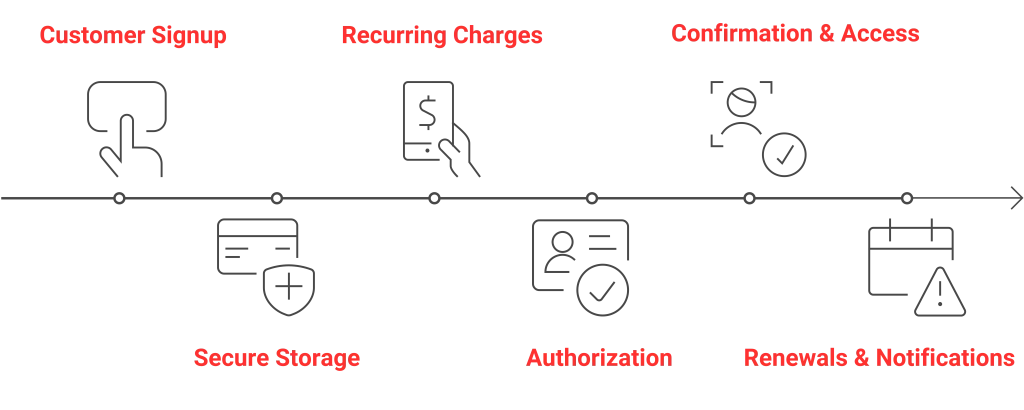
- Customer Signup: The customer chooses a subscription plan and enters their payment details (credit/debit card or ACH bank info).
- Secure Storage: The payment processor tokenizes and stores the information securely, in compliance with PCI-DSS standards.
- Recurring Charges: On the set billing date, the system automatically initiates a payment request.
- Authorization: The issuing bank approves or declines the charge.
- Confirmation & Access: Upon approval, the customer receives a confirmation, and access to the service continues uninterrupted.
- Renewals & Notifications: Customers are usually notified of upcoming charges or failed payments, ensuring transparency.
Benefits of Subscription Payment Processing: –
1. Predictable Cash Flow:
One of the biggest advantages is consistent revenue. With recurring billing, businesses can better forecast income and plan for growth.
2. Improved Customer Retention:
By automating billing, you reduce friction in the customer experience. Customers don’t have to manually pay each time, increasing long-term retention.
3. Time & Cost Efficiency:
Automated systems mean fewer resources spent on invoicing, collections, or manual billing errors.
4. Flexibility in Pricing Models:
You can offer tiered pricing, usage-based billing, or customizable plans to meet diverse customer needs.
5. Compliance & Security:
Modern payment processors are designed to comply with U.S. financial regulations, PCI-DSS standards, and bank protocols—keeping both you and your customers safe.
U.S. Regulations & Best Practices: –
Operating in the United States means you must follow certain legal and industry standards. Here are a few critical ones:
- PCI DSS Compliance: Any business that stores or processes card data must meet Payment Card Industry Data Security Standards.
- FTC Guidelines: You’re required to disclose billing terms clearly. No hidden fees, and easy-to-cancel policies must be provided.
- ACH Authorization Rules: If using bank drafts (eChecks), customers must provide written or electronic consent.
- Recurring Transaction Rules by Card Networks: Visa and Mastercard require merchants to notify customers before billing for free trials or plan renewals.
Staying compliant protects your business from chargebacks, fines, and customer mistrust.
Choosing the Right Subscription Payment Processor: –
Not all processors are created equal. Here are some key factors to consider when selecting a subscription billing platform in the U.S.:
- Recurring Billing Features: Look for systems that support multiple billing cycles, proration, upgrades/downgrades, and retry logic for failed payments.
- Payment Methods Supported: Ensure the platform accepts credit/debit cards, ACH payments, and even digital wallets like Apple Pay or PayPal.
- U.S. Bank Integration: A U.S.-based processor with direct integrations to domestic banks can speed up settlements and improve reliability.
- Invoicing & Tax Tools: Choose a platform that supports sales tax compliance, invoicing, and reporting to meet IRS and state tax requirements.
- Security & Compliance Tools: Your provider should offer fraud detection, tokenization, and be fully PCI compliant.
- Customer Support & Reporting: Robust support and real-time dashboards can help you resolve issues quickly and monitor performance effectively.
Subscription Metrics You Should Track: –
To optimize your subscription business, monitor these essential metrics:
- Monthly Recurring Revenue (MRR)
- Churn Rate
- Customer Lifetime Value (CLTV)
- Customer Acquisition Cost (CAC)
- Payment Success Rate
These metrics help you identify bottlenecks and opportunities to increase profitability.
Future of Subscription Payments: –
The subscription economy in the U.S. is evolving fast. Consumers now expect more flexibility, better control, and real-time communication. Here are some trends to watch:
- Usage-Based Billing: More companies are charging based on how much a service is used.
- Hybrid Subscriptions: Combining one-time purchases with recurring plans.
- Increased Focus on Retention: Advanced analytics and personalization tools to reduce churn.
- AI and Automation: Smarter retry systems and fraud prevention using machine learning.
Final Thoughts: –
Subscription payment processing isn’t just about collecting money—it’s about building trust and delivering a seamless experience. As a U.S.-based business, using the right tools and following best practices ensures you’re not only getting paid on time but also creating loyal, long-term customers.
Whether you’re running a small online store or a nationwide SaaS business, embracing a well-designed subscription billing system is a smart move toward sustainable growth.
 ChatGPT
 Grok
Grok Claude
 Perplexity
 Google Search