


Why Transactions Get Declined by Payment Gateways!
For most businesses, seeing a transaction marked “decline” can be frustrating, especially when the customer is genuine, and the payment should have gone through. But why does this happen? And how can merchants understand and reduce these declines? In today’s digital commerce landscape, payment gateways do much more than route payments. They also screen every transaction for risk, apply business rules, and interpret complex response codes from banks and card networks. Understanding why transactions get declined isn’t just a technical detail — it’s essential to protect revenue and customer trust.
Let’s explore the real reasons behind these declines, what they mean, and what businesses can do to keep approval rates high.
What actually happens when a payment is declined?
When a customer enters payment details and clicks “pay,” the payment gateway sends the data to the acquiring bank and card network. From there, the card‑issuing bank checks whether the payment should be approved.
If something seems wrong — insufficient funds, expired card, or suspicious activity — the issuing bank sends a decline response code back through the network. The payment gateway then relays this code to the merchant and the customer.
Some declines come directly from fraud detection systems, others from card issuers. Either way, the result for the customer is the same: “transaction declined.”
Common reasons payments get declined by the Payment Gateways: –
While every business will see occasional declines, patterns often reveal deeper causes. Here are the most common:
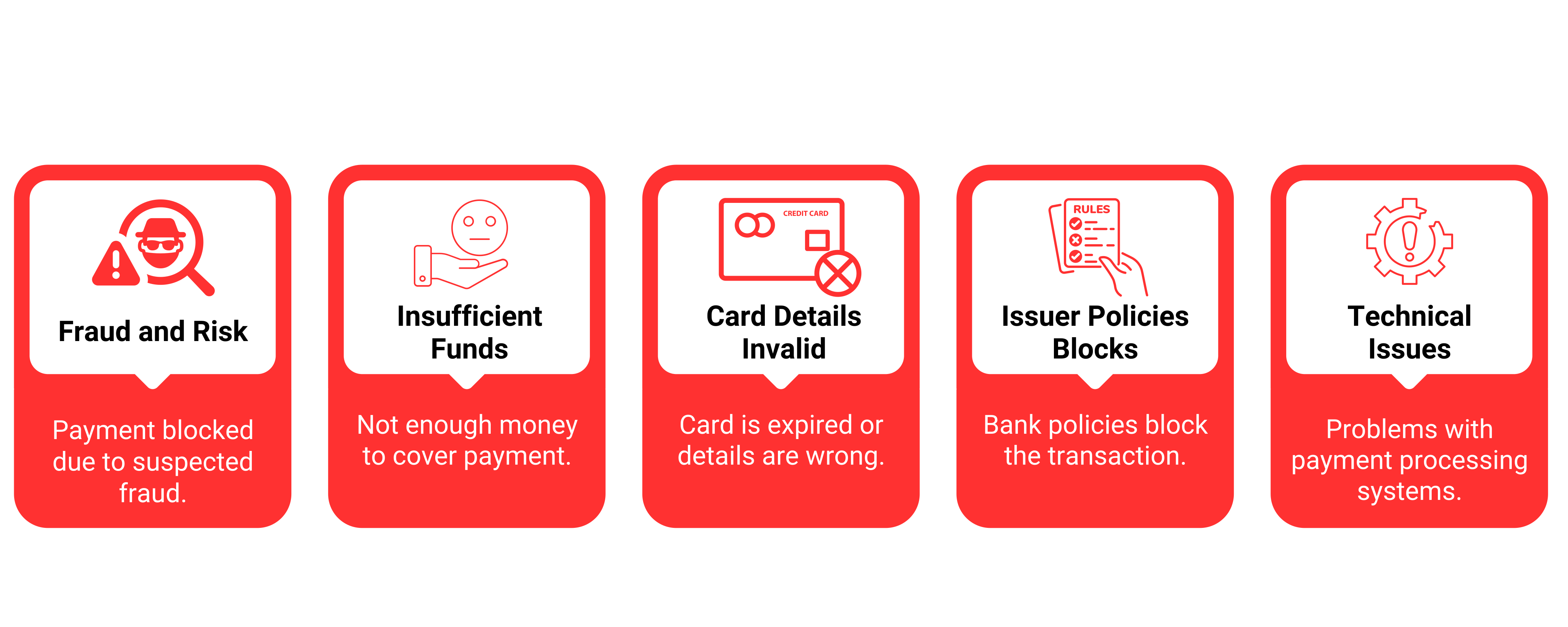
1. Fraud and risk filters:
Modern payment gateways use AI, machine learning, velocity checks, and rule‑based systems to detect suspicious patterns, for example:
- Multiple rapid attempts from the same card
- Purchases far from the cardholder’s location
- Mismatches between billing and shipping addresses
If a payment triggers these rules, the gateway may decline it to protect the merchant from fraud and chargebacks.
2. Insufficient funds or credit limits:
One of the simplest reasons: the cardholder doesn’t have enough balance or credit left.
Issuers automatically decline payments that exceed daily or available limits.
3. Expired, invalid, or incorrect card details:
It’s surprisingly common: customers enter an expired card, transpose numbers, or forget a new CVV after a card reissue.
Since gateways validate this data before authorization, incorrect details lead to instant declines.
4. Issuer policies and geographic blocks:
Some banks block international transactions or large purchases outside the customer’s usual location to prevent fraud.
Even legitimate customers may see declines if they travel, shop online from abroad, or buy high‑ticket items.
5. Technical issues:
Sometimes, declines aren’t about fraud or money at all:
- Payment gateway downtime
- Timeout between the merchant site and the gateway
- Network or API errors during payment processing
While often rare, these technical declines still appear as “payment failed” to the customer.
Soft declines vs. hard declines: What’s the difference?
Not all declines are the same. In payment industry terms:
- Soft declines mean the bank might approve the payment if retried, often caused by temporary holds, timeouts, or fraud checks.
- Hard declines are final; the card can’t be charged again without a new payment method (e.g., invalid card number, reported stolen).
Understanding this helps businesses know when retrying makes sense and when it won’t help.
The hidden cost of false positives: –
Fraud filters are essential, but if they’re too aggressive, they cause false positives: legitimate payments are wrongly declined. For businesses, this can mean:
- Lost revenue from abandoned carts
- Damaged customer trust
- More customer service issues
Industry studies suggest false declines cost merchants billions each year, sometimes more than actual fraud.
What merchants can do to reduce declines by payment gateways: –
While no merchant can avoid every decline, there are practical ways to reduce them:
- Review decline reports regularly to spot patterns (e.g., high declines from one region).
- Enable AVS and CVV checks to catch simple fraud without blocking genuine users.
- Use updated card data services so expired cards can be replaced automatically.
- Communicate with your payment processor about large upcoming sales or seasonal spikes to adjust risk settings.
- Offer multiple payment methods so customers can try another card or use ACH/eCheck if one fails.
These steps help balance security and acceptance, lowering fraud risk while keeping approval rates high.
Why it matters to understand the decline reasons: –
Every declined payment is a potential lost sale. For customers, repeated declines feel frustrating and may lead them to abandon your business entirely. For merchants, high decline rates can even flag your account as high‑risk, leading to higher fees or stricter reserve requirements.
By understanding decline codes, issuer policies, and gateway settings, merchants can:
- Troubleshoot common issues
- Adjust risk rules without inviting fraud
- Talk confidently with processors and banks about real problems
Looking ahead: smarter decline management
Payment gateways are evolving to reduce unnecessary declines, using tools like:
- Real‑time risk scoring: deciding instantly whether to approve, decline, or challenge.
- Adaptive fraud models: learning from every transaction to improve accuracy.
- Retry logic: automatically trying another card on file or asking for a new payment method.
As these systems improve, merchants can expect fewer false positives — but only if they review and fine‑tune their own gateway settings too.
Final thoughts: –
Declined payments are more than an inconvenience. They directly affect revenue, customer loyalty, and even a business’s standing with banks and payment processors.
By learning what really causes declines — from fraud filters to card issuer policies — businesses can take smarter steps to keep approval rates high, protect customers, and grow with confidence.

 ChatGPT
 Grok
Grok Claude
 Perplexity
 Google Search