


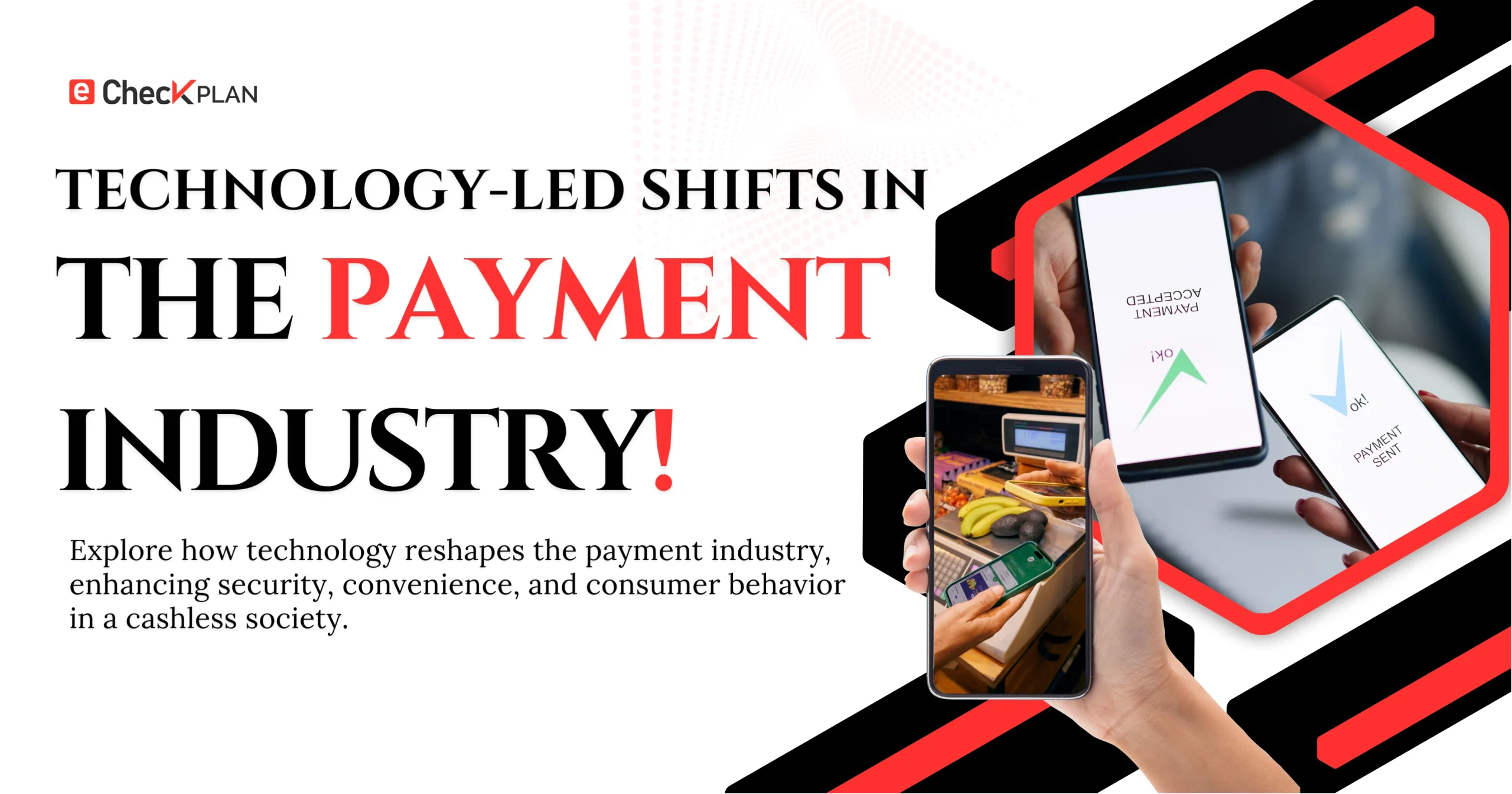
Technology-Led Shifts In The Payment Industry
Technological advances are causing a significant shift in the payment sector, changing how transactions are carried out. The advancement of payment systems, from mobile wallets to blockchain technology, is improving convenience, security, and reshaping consumer behavior and business models. This blog delves into the changes driven by technology in the payment sector, focusing on important trends, new developments, and their impact on the future.
The Rise of Digital Payments: –
There has been a notable increase in digital payments in recent years, which was sped up by the COVID-19 pandemic. With the growing demand for touch-free and convenient transaction options, digital payment methods have seen a rise in popularity among consumers. Recent reports indicate that global cashless payment volumes are projected to approach 1.3 trillion this year, with non-cash transaction volume growth expected to increase at a 15% compo1234
und annual growth rate (CAGR) until 2027. This pattern mirrors a larger shift in society away from using physical money, influenced by the importance of quick and safe financial transactions.
Key Technologies Driving Change: –
There are multiple important technologies leading this transformation.
- Mobile wallets: Platforms such as Apple Pay and Google Pay, have transformed the way consumers complete transactions. These wallets allow users to make contactless payments with a simple tap by securely saving payment details on their smartphones. This convenience has resulted in many consumers choosing fast and efficient transaction methods.
- Blockchain Technology: Blockchain is revolutionizing the payments industry. Blockchain, with its decentralized and transparent ledger, cuts down on the requirement for intermediaries, resulting in reduced costs and faster transaction processing. Its ability to improve security with unchangeable records makes it an appealing choice for both businesses and customers.
- Artificial Intelligence (AI) and Machine Learning (ML): They are being utilized to improve the detection of fraud and assessment of risks in payment systems. Through the analysis of transaction patterns and user behavior, these technologies have the ability to detect irregular activities as they occur, allowing for immediate action to reduce the risk of potential losses. Furthermore, AI-driven chatbots offer immediate assistance for questions related to payments, enhancing customer service interactions.
- Biometric Authentication: Incorporating biometric authentication methods like fingerprint scanning and facial recognition improves security and simplifies the payment procedure. Businesses can decrease their dependence on traditional passwords or PINs by confirming users’ identities with unique biometric information.
Emerging Trends in Payment Solutions
The future of payments is being influenced by multiple trends as technology advances.
- Contactless payments: They have become more available due to the increased use of Near Field Communication (NFC) technology. This technique enables individuals to conduct transactions without having to physically touch point-of-sale devices, greatly increasing convenience and hygiene during transactions.
- Real-Time Payments: Instantaneous transactions are spurring the evolution of real-time payment systems due to the demand for quick payments. These platforms allow both consumers and businesses to quickly conduct transactions, improving cash flow management for companies that depend on fast payment processing.
- Social Commerce: Social commerce has emerged with the incorporation of e-commerce functionalities into social media platforms. Companies are able to offer their products directly on platforms such as Instagram and Facebook, enabling customers to conveniently buy items while using social media. This pattern mirrors the shift in consumer habits as shopping becomes more intertwined with social interactions.
The Impact on Businesses: –
The changes in technology in the payment sector greatly impact businesses. Businesses that adopt these advancements can achieve a competitive advantage through providing improved customer experiences and more efficient operations. For example:
- Cost-effectiveness: Incorporating digital payment solutions utilizing blockchain or AI technologies can lower transaction expenses linked to conventional banking methods for businesses. This increase in productivity not only boosts profits but also enables companies to distribute resources more efficiently.
- Enhanced Customer Interaction: The increase in popularity of mobile wallets and contactless payments boosts customer engagement through the introduction of convenient choices tailored to the preferences of contemporary consumers. Businesses that place importance on providing smooth payment experiences can expect to build loyalty with their customers.
- Data Insights: Sophisticated payment systems produce valuable data that can be examined to gain a deeper understanding of consumer behavior. Businesses can use these insights to customize marketing strategies, improve inventory management, and increase overall customer satisfaction.
Challenges Ahead: –
Although technology-driven changes in payments offer numerous benefits, there are still obstacles that need to be addressed.
- Security Concerns: Increasing worries about cyber threats accompany the rise of digital payments. Companies need to make investments in strong security measures like encryption protocols and multi-factor authentication to safeguard sensitive customer information from breaches.
- Regulatory Compliance: Adhering to different regulations in various locations is necessary due to the changing nature of digital payments. To prevent penalties, companies need to keep up-to-date with legal obligations regarding data protection and financial transactions.
- Digital Divide: Urban areas are quick to embrace digital payment options, while rural areas may fall behind because of restricted technology or banking services. It is essential to tackle this digital divide to ensure that all consumers can take advantage of progress in payment technology.
Conclusion: –
Technological advancements are causing significant changes in the payment industry, improving convenience, security, and efficiency. With the increasing popularity of digital payments worldwide, businesses need to adjust to these changes by adopting creative solutions that align with changing consumer demands. Companies can place themselves at the forefront of this transformation by utilizing technologies like mobile wallets, blockchain, AI, and biometric authentication.
As we transition to a society that relies less on cash, it is crucial for businesses to adapt quickly to new trends and tackle the challenges that come with this change. In this ever-changing landscape, those who are open to innovation and adaptation will find promising opportunities in the future of payments.
 ChatGPT
 Grok
Grok Claude
 Perplexity
 Google Search