In today’s digital business world, “API” is one of those terms you hear often, but what does it really mean in the context of payment gateways? And why should business owners, developers, and even non-technical teams care? Whether you run a small online store or manage enterprise-level payments, understanding how payment gateway APIs work can help you make smarter choices, reduce errors, and future-proof your operations. Let’s break it down in simple, practical terms.
What is an API, really?
API stands for Application Programming Interface. In basic terms, it’s a set of rules and tools that let different software systems talk to each other.
Think of it like a digital waiter: you (the website or app) tell the API what you need (process this payment), and the API carries the request to the payment gateway, then returns the result (approved, declined, or needs more info). Without APIs, modern e-commerce, mobile apps, and even recurring billing wouldn’t function seamlessly.
Leading payment providers like Stripe and Square publish clear API documentation for developers.
Why payment gateways use APIs: –
Payment gateways act as secure bridges between your business and the financial networks (banks, card networks, ACH systems). APIs make that connection flexible and real-time.
Here’s why APIs matter in this context:
- Real-time communication: APIs let your checkout page instantly check if a card is valid, whether funds are available, and if the payment should be approved.
- Custom integrations: Every business has different needs. APIs allow developers to build payment systems that fit specific workflows, from mobile apps to custom invoicing tools.
- Updates and scalability: APIs make it easier to add new features (like new payment methods) or handle more transactions as your business grows.
What happens behind the scenes during a payment: –
When a customer enters their payment details and clicks “pay,” the API:
- Collects the payment information securely.
- Packages it into a request.
- Sends it to the payment gateway.
- Waits for the gateway to process the request with banks and networks.
- Receives a response (approved, declined, or flagged).
- Passes that respond back to your website or app.
All of this typically happens in just a few seconds, thanks to APIs.
Key features of modern payment gateway APIs: –
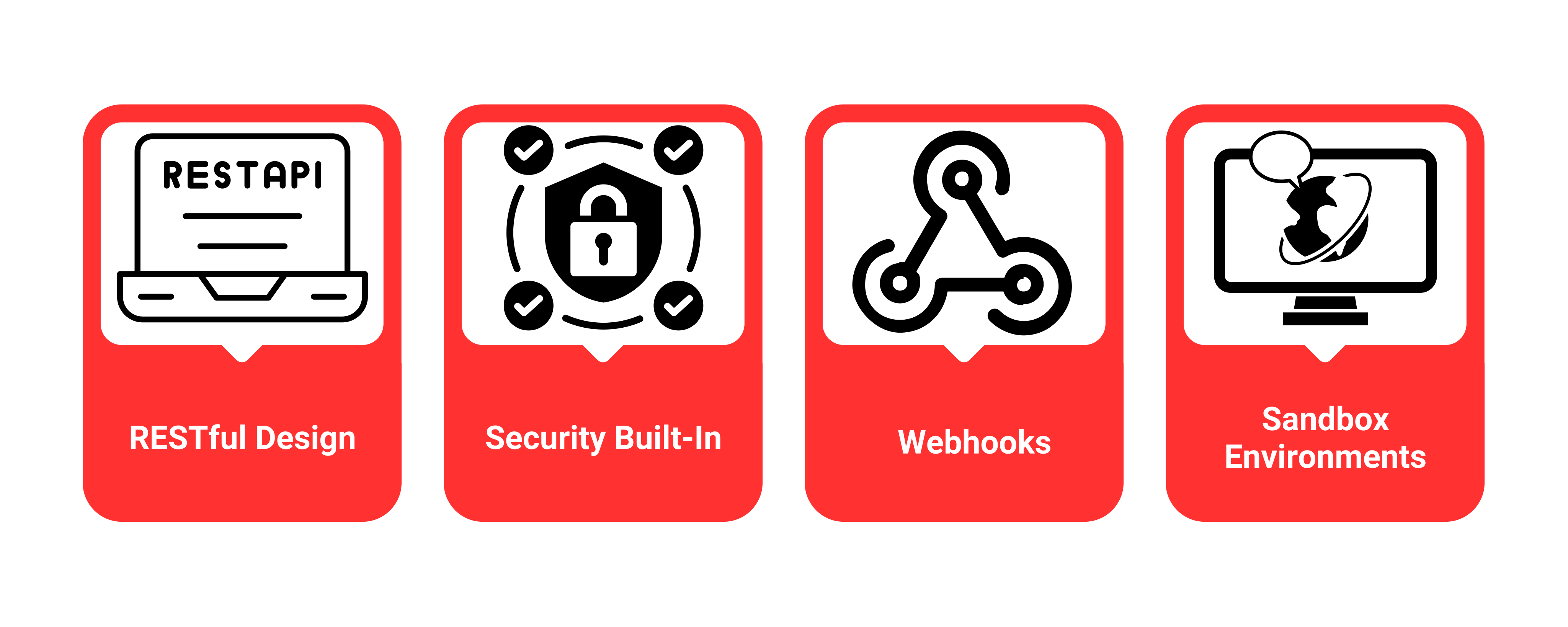
1. RESTful design:
Most payment APIs today follow REST (Representational State Transfer) principles. They use simple web protocols (like HTTP) and return data in formats like JSON, making them easier for developers to work with.
2. Security built in:
Payment APIs include encryption, tokenization (replacing card numbers with secure tokens), and authentication (like API keys or OAuth) to ensure only authorized apps can use them.
3. Webhooks:
APIs often support webhooks — automated messages sent to your system when something changes (e.g., a payment succeeds, fails, or is refunded). This helps keep your app or dashboard up to date.
4. Sandbox environments:
Gateways typically offer test environments where developers can simulate real payments without moving real money, helping teams catch errors before going live.
Why businesses (not just developers) should care about APIs: –
Even if you’re not writing code, understanding how your payment gateway’s API works can:
- Help you choose the right provider: Some gateways have modern, flexible APIs; others use older systems that are harder to customize.
- Reduce time-to-market: If your team can integrate payments faster, you can launch new features sooner.
- Lower costs: Simpler APIs mean fewer integration errors and less developer time spent fixing issues.
- Enable unique business models: Subscription billing, marketplaces, split payments — many modern business models depend on robust API features.
Developer experience: an often-overlooked factor
When evaluating payment gateways, technical teams look beyond price and features. A well-designed API can save months of work and reduce errors. What developers often check:
- Clarity of documentation: Are examples provided? Is it regularly updated?
- SDKs and libraries: Does the gateway offer ready-made tools for popular languages like Python, Java, or JavaScript?
- Reliability and uptime: Are there transparent status pages showing performance?
- Community and support: Can developers get help quickly if something breaks?
A modern, developer-friendly API makes payments not just a back-end process but a business enabler.
APIs and mobile, subscription, and recurring payments: –
APIs are the backbone of:
- Mobile payments: Apps securely capture and send payment data via APIs.
- Subscription billing: APIs manage recurring charges, cancellations, and upgrades.
- Custom invoicing: APIs let you create, send, and track invoices from inside your own software.
In other words, if your business isn’t limited to a simple “buy now” button, APIs unlock advanced payment flows.
Future trends: where payment gateway APIs are going
The payments industry is evolving quickly. APIs are central to new trends like:
- Real-time payments (RTP): APIs help deliver instant settlement and confirmation.
- AI-powered fraud detection: APIs let your system interact with advanced risk scoring engines in real time.
- Embedded finance: Businesses can build banking and lending features directly into their apps through APIs.
- Omnichannel payments: APIs allow unified payment experiences across online, mobile, and in-store channels.
Staying API-ready means your business can adapt as customer expectations and technology change.
Practical questions to ask your payment gateway provider: –
Even if you’re not a developer, these questions help ensure your chosen gateway is flexible and future-proof:
- What API protocols do you offer (REST, SOAP, etc.)?
- Do you support tokenization and PCI compliance?
- Are there SDKs for the programming languages my team uses?
- How detailed is your documentation?
- Do you have a sandbox for testing?
- What’s your historical uptime?
Conclusion: –
Payment gateway APIs may sound technical, but they power every online and mobile transaction your business handles. From secure processing to fraud checks and real-time reporting, APIs quietly keep your payment systems running.
By understanding what APIs do — and why they matter — you can choose better partners, speed up your projects, and future-proof your payment systems against new customer demands.

 ChatGPT
 Grok
Grok
 Claude
 Perplexity
 Google Search