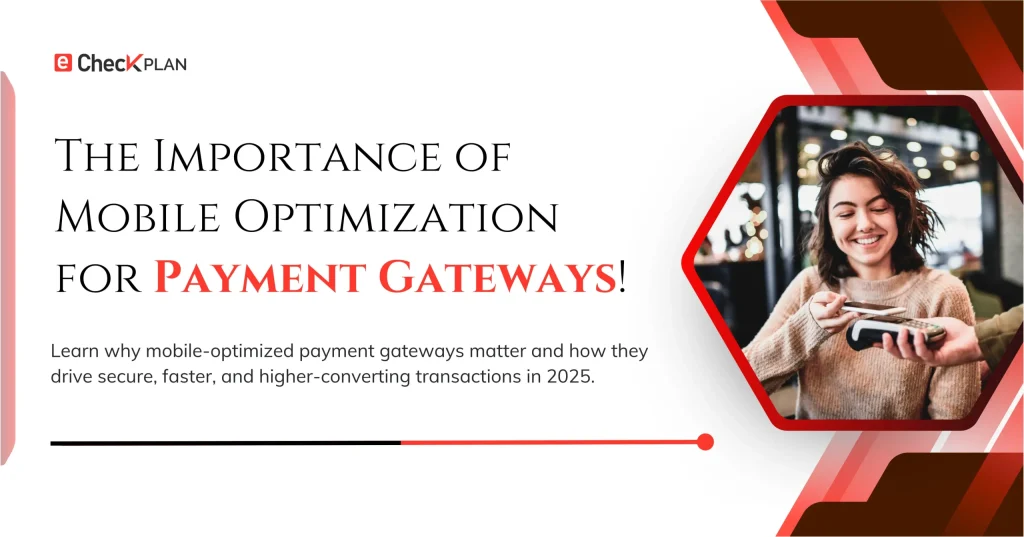
This year, mobile devices will dominate the way people shop and pay. More than ever, customers expect payments to be quick, simple, and secure—without struggling through clunky forms or slow-loading pages. For businesses, this makes mobile optimization of payment gateways a non-negotiable priority.
If your checkout isn’t built for mobile, you risk higher cart abandonment, lost revenue, and a weaker reputation in the digital marketplace. Let’s break down why mobile optimization matters now more than ever, how it impacts conversions, and the steps businesses can take to create seamless mobile experiences.
Table of Contents:
Mobile Payments Are Driving Digital Commerce: –
Explosive mobile commerce growth:
Mobile commerce in North America is projected to surpass $710 billion in sales by the end of 2025, up from $564 billion in 2024. That’s more than half of all retail e-commerce transactions (Statista, 2025 forecast).
Smartphone shopping habits:
Roughly 8 in 10 smartphone owners have made at least one mobile purchase in the past six months, with fashion, food delivery, and electronics topping the list.
Shift to digital wallets:
Mobile wallets such as Apple Pay, Google Pay, and PayPal are now preferred by over 50% of online shoppers as their go-to checkout option, surpassing traditional cards in certain categories.
When the majority of transactions are happening on mobile, it’s clear that optimized payment gateways aren’t just nice to have—they’re a business essential.
The Cost of Poorly Optimized Gateways: –
High abandonment rates:
Mobile cart abandonment averages around 77%, one of the highest among digital channels. The most common reasons include pages that take too long to load, payment forms that are too complicated, or checkout flows that don’t fit small screens.
Lost conversions and loyalty:
Even if customers love your product, a frustrating payment process can cause them to leave. Worse, 40% of buyers won’t return to a business after a bad mobile experience.
Competitive disadvantage:
Fintech innovators and retail giants have already invested heavily in sleek, mobile-first checkout systems. Businesses that don’t keep up risk being left behind.
Core Features of a Mobile-Optimized Payment Gateway: –
1. Responsive design:
Checkout pages must adjust automatically to fit different screen sizes and operating systems, without forcing users to pinch, zoom, or scroll awkwardly.
2. Lightning-fast load times:
Mobile users expect instant responses. Payment gateways should use lightweight code, compressed images, and reliable servers to ensure fast performance.
3. Simplified checkout flow:
Reduce unnecessary steps. Enable guest checkout, support auto-fill, and integrate with digital wallets to minimize friction.
4. Visible security and compliance:
Trust signals like SSL certificates, PCI DSS compliance badges, and two-factor authentication reassure customers that their data is safe.
5. Seamless integration with wallets and apps:
Mobile-first customers expect to pay with Apple Pay, Google Pay, Venmo, or PayPal. Offering these options makes transactions both faster and more familiar.
6. Cross-platform reliability:
The checkout process should work equally well across iPhones, Android devices, tablets, and even smartwatches.
Why Fintech Leaders Are Focused on Mobile: –
Industry analysts highlight three main reasons fintech providers are prioritizing mobile optimization:
- Conversion impact: Small speed improvements and UX can boost checkout conversion rates by 10–15%.
- Security without friction: Biometric authentication (like Face ID) offers both convenience and fraud prevention, balancing user trust and efficiency.
- Future readiness: Payment technology is evolving toward in-app and one-tap transactions. Businesses that embrace mobile optimization now will adapt more smoothly as new technologies roll out.
Best Practices for Optimization: –
Here’s what experts recommend for businesses that want to improve their mobile checkout systems:
- Use adaptive design frameworks that ensure mobile responsiveness.
- Offer multiple payment options, including cards, ACH, and digital wallets.
- Enable one-tap payments with saved credentials for returning customers.
- Keep forms minimal—request only essential data to complete the transaction.
- Monitor analytics to identify where customers drop off and optimize weak points.
- A/B test mobile flows to continuously refine speed, design, and trust elements.
Real Market Trends That Show the Shift: –
- Apple Pay expansion: Analysts forecast that Apple Pay alone could process over $600 billion in transactions annually by 2026, a testament to growing reliance on mobile wallets.
- Card-not-present fraud: As mobile payments increase, so does the need for robust fraud prevention. AI-powered fraud detection in mobile gateways can cut fraud rates by 20% without adding friction.
- Voice-enabled payments: Some financial institutions are testing voice checkout features that allow users to complete payments hands-free.
The Next Chapter in Mobile Payments: –
The future of mobile payment gateways is being shaped by:
- Biometric-first security (fingerprint, facial recognition, and even behavioral biometrics).
- AI-driven personalization to tailor checkout flows to user behavior.
- Omnichannel consistency, where mobile, desktop, and in-store experiences feel unified.
- Contextual payments, where transactions happen directly inside apps, social media platforms, or even smart devices.
Businesses that adapt early will not only capture more sales but also foster stronger trust and loyalty among mobile-first customers.
Final Thoughts: –
Mobile has become the dominant way people shop and pay. Payment gateways that aren’t optimized for mobiles are more than an inconvenience—it’s a direct hit to sales, customer trust, and brand reputation.
By investing in fast, secure, and mobile-friendly payment systems, businesses aren’t just keeping up with fintech trends—they’re building a foundation for growth in a market where mobile is king.

 ChatGPT
 Grok
Grok
 Claude
 Perplexity
 Google Search